Your Website Should Be Your Hardest Working Sales Rep.
Sending thousands of visitors to a slow, confusing or outdated website is the fastest way to waste your marketing budget. Leadnox treats website design as sales engineering: custom websites, complex web applications and conversion-optimized landing pages that turn cold traffic into booked appointments and closed revenue.
The Difference Between a Brochure Website and a Revenue Engine
When executives start looking at web design agencies, they usually focus on looks: a site that "looks modern" or has eye-catching animations. Good looks are only the minimum. A commercial website's real job is to guide a visitor from first curiosity to a clear decision to buy, with as little friction as possible.
Many agencies build digital brochures: static pages that list your services and hope the visitor eventually finds the contact page. Leadnox builds websites designed to produce revenue. Conversion rate optimization (CRO), the practice of raising the share of visitors who take action, decides every button placement and headline. We study heatmaps, scroll depth and session recordings to see exactly where your current website loses money. Removing those friction points can raise lead volume without raising ad spend.
Core Deliverable: High Converting Landing Page Design
If you run paid advertising (Google Ads, Meta Ads, LinkedIn Ads) and send that traffic to your standard corporate homepage, you pay more than you need to for every customer. Homepages are built for browsing, and landing pages are built for one action.
We specialize in high converting landing page design for paid traffic.
- Strict Message Match: When a visitor clicks an ad promising a "Free B2B Marketing Audit," the landing page has to repeat that exact offer in the main H1 headline. Any mismatch makes people leave right away.
- The 1:1 Attention Ratio: We remove the standard navigation bar, footer links and sub-menus from our landing pages. The visitor has two choices: take the main offer or close the tab. Narrowing the choice this way raises conversion rates noticeably.
- Psychological Trust Anchors: Cold traffic needs a reason to trust you right away. We place social proof, partner logos, verified client testimonials and industry awards near the main call-to-action buttons to lower the perceived risk of filling out the form.
- Multi-Step Form Logic: Asking a cold prospect for ten pieces of information at once makes many abandon the form. We use small commitments, breaking long forms into short interactive steps (e.g., asking for a zip code first, before asking for a phone number).
Advanced Web Application Development
Mid-market companies, B2B SaaS companies and large service providers need more than a standard WordPress template. They need complex data handling, secure client portals and custom API integrations, and our technical engineering pod specializes in that kind of web application development.
Custom Portals & Dashboards
We build secure web applications with logins that let your clients check real-time project status, download invoices and work with your team. Moving client communication out of scattered email threads and into one web app cuts operating overhead and raises the perceived value of your service.
API Architecture & CRM Synchronization
A modern website has to exchange data reliably with the rest of your software. We build custom API connections between your front-end website and your back-end systems (Salesforce, HubSpot, GoHighLevel, Stripe, custom ERPs). When a lead submits a form or makes a payment on your web app, the data updates across your whole organization right away, with no manual data entry.
Headless CMS Development
For speed and security, we often use "headless" architectures for enterprise clients. Separating the front-end interface (built on modern frameworks like React or Vue.js) from the back-end database gives you web applications that load in milliseconds, resist standard database hacking attempts and can publish content to websites, mobile apps and smart devices at the same time.
E-Commerce Conversion Optimization & Shopify Architecture
The unit economics of an e-commerce brand depend on the conversion rate. If your store converts at 1.2% and your competitor converts at 3.5%, they can afford to spend three times as much to acquire a customer. They will outbid you for the ad inventory and price you out of the market.
Our specialized e-commerce pod works on ecommerce conversion optimization to raise your Return on Ad Spend (ROAS).
Frictionless Checkout Engineering
Most lost e-commerce revenue is lost at the cart. We audit your checkout flow to remove forced account creation, cut unnecessary form fields and add express payment options (Apple Pay, Google Pay, Shop Pay). We also set up automated cart abandonment sequences that collect the shopper's email early in checkout, so we can remarket to them if they leave.
High-Performance Product Pages (PDPs)
A product page has to stand in for touching the product in a physical store. We design PDPs with fast 3D product rendering, optimized video, dynamic sizing charts and user-generated content (UGC) review feeds. Sticky "Add to Cart" buttons stay visible however far the shopper scrolls down the page.
Intelligent Upselling & Cross-Selling
To raise Average Order Value (AOV), we build post-purchase upsell flows. Once the customer's card is securely on file, they see a complementary product they can add to the order with a single click, without re-entering payment details.
The Technical Foundation: Speed, Security, & Core Web Vitals
Opinions about design differ, but code performance can be measured. Google's ranking systems use Core Web Vitals, its measures of loading speed, responsiveness and visual stability (Google Search Central). A good-looking website that takes six seconds to load on a 4G mobile network starts at a disadvantage in search.
Sub-Second Mobile-First Engineering
We do not build desktop websites and shrink them for mobile. Most US internet traffic is mobile, so we design the mobile experience first. We use edge caching, Content Delivery Networks (CDNs) and next-generation image compression (WebP and AVIF formats) so your site loads instantly on any device.
Technical SEO Architecture
A website has to be easy for search engine crawlers to read. During development we set up your site's hierarchy and clean URLs, organize heading tags, generate XML sitemaps automatically and add Schema markup (JSON-LD) that tells Google's index clearly what your business is and does.
Ongoing Website Management & Security
A website needs care after launch. Our website management service protects it with daily off-site database backups, continuous malware scanning, automated plugin updates, server-side firewall management and uptime monitoring. If we detect a vulnerability, our engineering team patches it before your traffic is affected.
Our 4-Phase Web Engineering Lifecycle
Our web design process is structured, transparent and collaborative, with no surprise reveals or chaotic development cycles.
-
Phase 1: UX Wireframing & Conversion Strategy
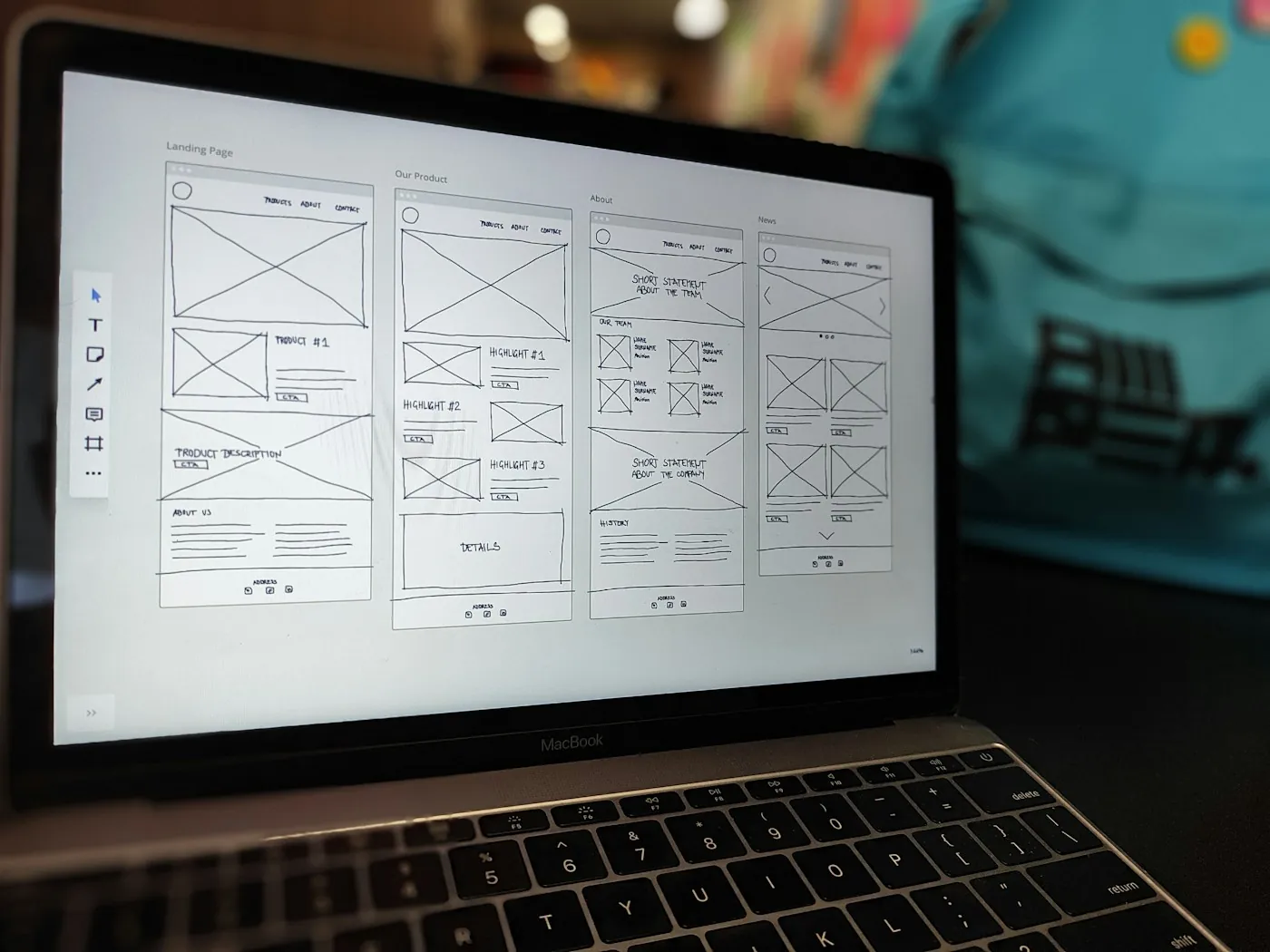
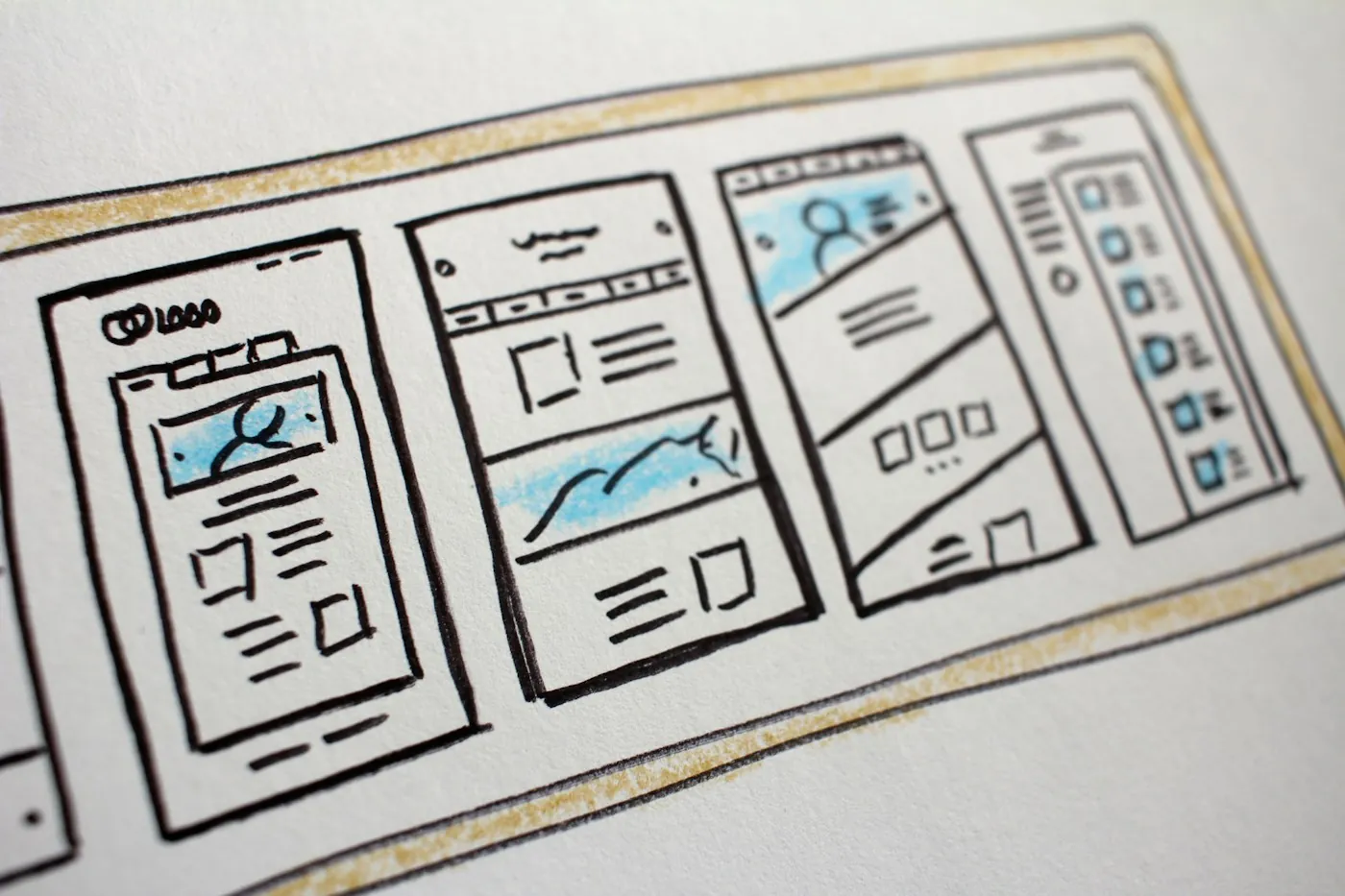
Before we apply brand colors or typography, we focus on how visitors will use the site. We build low-fidelity wireframes that map the site's structure, define the user journeys, set the conversion points and finalize the site map.
-
Phase 2: High-Fidelity UI Design & Prototyping
Once the structure is approved, our UI designers turn the wireframes into full designs. We apply your brand guidelines, choose typography and design custom icons. You get an interactive, clickable prototype that shows exactly how the website will look and feel on desktop and mobile before any code is written.
-
Phase 3: Full-Stack Engineering & API Integration
With the designs locked, our developers start coding. We build the front-end interfaces, configure the back-end databases and connect all required third-party APIs (payment gateways, CRMs, marketing automation software). The site is built in a secure staging environment so your team can review progress in real time.
-
Phase 4: QA Testing, Launch, & Continuous CRO
Before launch, the site goes through thorough Quality Assurance (QA) testing. We test form submissions, load speeds, browser compatibility and mobile layout across dozens of device profiles. Once the site is live, we install heatmap and session recording tools to watch how visitors use it and start our first cycle of continuous conversion rate optimization.
What a Healthcare Client Said About the Website
"Rubin is a reliable and detail-oriented website designer. He helped transform my vision into a modern, user-friendly website and was a pleasure to work with throughout."
Kristine T., Communications at Albatha Healthcare, in a LinkedIn recommendation of 5 May 2026, about the website Leadnox built for Modern Pharmaceutical LLC (MPC), part of the Albatha Group.
What US Brands Get from Leadnox Web Design
| Feature | Standard Web Design Agencies | The Leadnox Web Engineering Pod |
|---|---|---|
| Primary Focus | Design based on taste | Data-driven conversion optimization |
| Development Approach | Bloated templates that load slowly | Custom, lightweight, mobile-first code |
| Traffic Integration | Ignores how paid traffic interacts with the site | Builds dedicated landing pages mapped to ad intent |
| Data Synchronization | Basic email form notifications | Full CRM, API and automation integrations |
| Post-Launch Strategy | Hands over the keys and disappears | Continuous A/B testing and performance management |
Sources
The figures and statements on this page come from these published sources. Each was opened and checked on 19 November 2026.
- Understanding Core Web Vitals and Google search results. Google Search Central
Frequently Asked Questions About Web Design & CRO
Cannot find what you are looking for? Talk to our team and we will answer it directly.
A set of high-converting landing pages can typically go live within 14 to 21 days. A full corporate website overhaul generally takes 45 to 60 days, depending on how much content needs to move. Advanced web application development and custom e-commerce builds have their own timelines, scoped during discovery.
Yes, you own the website code once it is completed. "Rent-a-site" SaaS platforms keep control of your data, while Leadnox builds digital assets that belong to you completely. On final payment and launch, all source code, design files and intellectual property rights transfer to your organization.
Yes, we integrate new websites with Salesforce, HubSpot and other CRMs as a standard part of every build. We build secure API connections that sync every form submission, lead capture and transaction to your sales team's database right away, with full attribution data intact.
Conversion Rate Optimization (CRO) is the process of raising the percentage of website visitors who take a desired action. That action might be filling out a form, making a purchase or calling your office. We use A/B split testing to measure what works: version A of a page goes to 50% of your traffic and version B to the other 50%, which shows which headline, image or button design produces the most revenue.
A small business website's cost depends on the page count, whether it's custom built or a template, what it must connect to, and who writes the content. A five-page brochure site is a different job from a site with booking, payments and a CRM sync. E-commerce and client portals cost the most. Leadnox doesn't publish set prices. We scope each build after a free UX and conversion audit, so the quote reflects what your site actually needs.
Website redesign cost is driven mostly by content migration, integrations, and how much of the structure needs to change. Moving hundreds of pages and keeping their search rankings takes careful redirect work. Reconnecting forms to a CRM, payment gateway or booking tool adds engineering time. A redesign that only refreshes visuals costs less but often fixes little. Start with heatmaps and session recordings to see where the current site loses visitors, then spend where that data points.
Website maintenance cost depends on the platform, the number of plugins and integrations, and how much monitoring you want. At minimum, budget for hosting, your domain, software licenses, and someone to apply updates. Leadnox's website management covers daily off-site backups, malware scanning, automated plugin updates, firewall management and uptime monitoring. A custom or headless build with fewer plugins usually needs less patching than a heavily extended template site.
The best landing page designs repeat the ad's exact promise in the headline and give the visitor one thing to do. Strip out the main menu and footer links so attention stays on the offer. Put reviews, client logos or testimonials right next to the button. For longer forms, ask the easy questions first, like a zip code, before the phone number. Then A/B test headlines and form length, so the data decides which design wins.
Most web designers charge by fixed project price, hourly rate or monthly retainer, and the model tells you a lot about what you're buying. A fixed price suits a clearly scoped build. Hourly suits small changes. A retainer fits ongoing testing, updates and security. Whatever the model, confirm you'll own the code and design files at launch. With Leadnox, all source code and intellectual property transfer to you on final payment and launch.