The Short Version
Hawaii homeowners can now choose a $199.95 Apple Home Collection thermostat themselves, but Hawaii has no utility credit to claim and often no wall thermostat to replace. Both thermostats are designed for conventional 24 volt systems, so they cannot directly control a ductless mini split. Publish that answer and a flat rate for the changeover.
Three homeowners called you this month holding a thermostat they had already bought. One in Honolulu wanted to know whether it would run the split system in his living room. Another had already pulled the old control off the wall and could not get the air handler to start. The third wanted you to confirm, before she ordered, that the thermostat would still earn her the utility credit her sister on the mainland gets. None of those calls was a lead, and each one took twenty minutes.
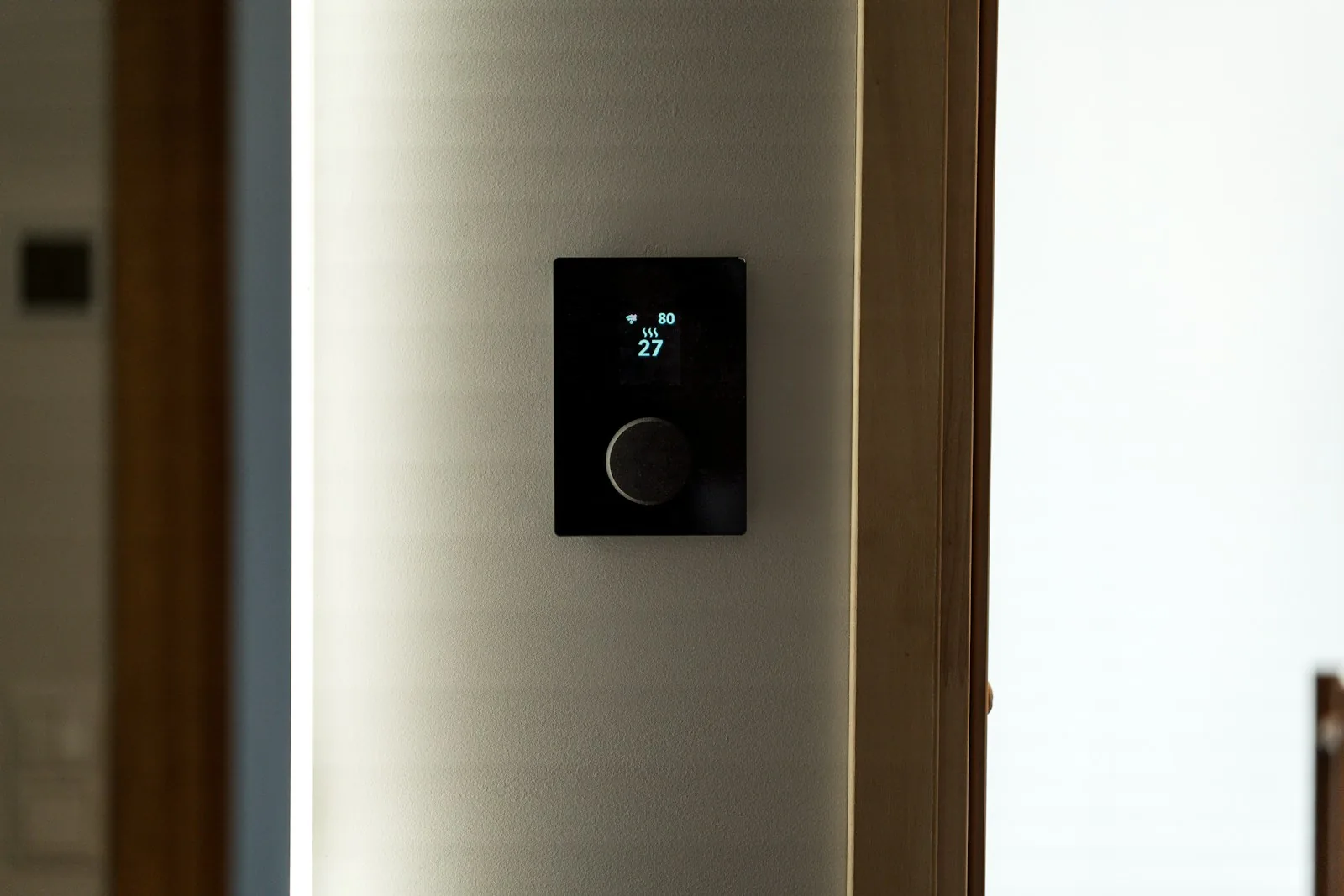
The cause is a product launch. On October 13, 2026, Apple introduced the Apple Home Collection, and two of its products are smart thermostats: the LG Smart Thermostat and the Schneider Home Smart Thermostat, both priced at $199.95 in the United States. Apple calls them DIY friendly, says the collection becomes available starting in December, and has already named a paid installation partner available at Apple Retail. That partner is ADT, an alarm company.
HVAC contractors can turn this into work, and stocking the thermostat on the truck is not the answer. This article covers what Apple announced in October 2026, six ways a homeowner bought thermostat shows up in an HVAC pipeline, why the problem looks completely different in Hawaii than in Rhode Island, Iowa and Ohio, and what to publish so the homeowner finds your answer before she clicks buy.
Apple Put a $199.95 Thermostat in Front of Every iPhone Owner on October 13, 2026
Apple entered the residential thermostat market on October 13, 2026 with two co developed products, both priced at $199.95 in the United States, and no thermostat of its own. Apple introduced the Apple Home Collection that day, and its two thermostats are the LG Smart Thermostat and the Schneider Home Smart Thermostat. Both are Matter compatible, both support Thread, and both set up when the homeowner taps an iPhone against the device.
What Apple Announced, and What It Did Not Say
Apple's published specification is broad on purpose. The thermostats "work with a broad range of HVAC systems" and are "DIY friendly", with on device wire detection to help during setup. The ACHR NEWS reported on October 13, 2026 that the LG unit is a circular design with a 2.4 inch display, advertised as compatible with conventional furnaces, air conditioners, heat pumps, boilers and fan coil units. The Schneider unit uses an LCD display and targets most standard 24 volt residential systems. The same report notes that Apple has not said whether either model supports multistage equipment, dual fuel systems or communicating controls.
Those three open questions decide whether the thermostat works in a given house. In the HVAC replacement market, multistage, dual fuel and communicating equipment are common, and they describe most of what a good contractor has installed in the last eight years.
Apple Named an Installation Partner, and It Was Not the HVAC Trade
Apple is sending paid thermostat installation to a national alarm company, and local mechanical contractors are left out. The Apple newsroom announcement says professional installation through ADT is available at Apple Retail for an additional charge, in the United States starting this fall. A homeowner who buys a thermostat in an Apple Store and asks who can fit it is pointed to a company that does not service the equipment the thermostat controls. The next question is almost always about that equipment, and the installer who mounted the control is the one who has to answer it.
The One Line in the Announcement That Deletes Hawaii
On launch day, Apple limited its headline energy feature to the mainland in writing. The newsroom page says Clean Energy Guidance shifts heating and cooling to cleaner and lower cost periods "in the contiguous U.S." for customers on a compatible utility plan. Hawaii is outside the contiguous United States. The one feature that justifies a $199.95 purchase on energy grounds does nothing in Honolulu, Hilo or Kahului, and nobody at the point of sale is likely to mention that.
Hawaii is also where the savings argument should be strongest. Hawaii's average residential electricity price was 48.00 cents per kilowatt hour in July 2026, the highest of any state and well above the US average of 18.31 cents, according to US Energy Information Administration data. A device sold on its energy intelligence arrives with that feature switched off in the state where a kilowatt hour costs the most.
Six Ways a Homeowner Bought Thermostat Shows Up in Your Pipeline
A homeowner bought thermostat never appears in an HVAC contractor's numbers under that name. It shows up as six smaller symptoms, and most of them look like scheduling or sales problems until you trace them back to a purchase made before the phone rang.
The Compatibility Call Arrives Before the Install, and Nobody Pays for It
The first cost is a twenty minute phone call you cannot invoice. Apple has published no compatibility matrix for multistage, dual fuel or communicating systems, so a homeowner with a two stage furnace and a heat pump cannot answer the question herself. She calls the company that installed the equipment. You pull the job file, read the model numbers and give away, for free, expertise that could have brought in business if it were published on your own site. Publishing that answer once, in a form search engines and AI assistants can quote, is GEO, AEO and SEO work.
Half the Homes in Your Hawaii Service Area Have Nowhere to Put It
A 24 volt wall thermostat controls a ducted central system, and much of the cooling in Hawaii runs without ducts. Hawaii Energy's own home cooling guidance lists window and room air conditioners and ductless mini splits beside central systems as mainstream choices, and recommends window or room units for apartments and condominiums. A mini split takes commands from a handheld infrared remote or the manufacturer's own wall controller, and it has no R, C, Y and G terminals for a thermostat. Many of the compatibility calls your Honolulu office takes in December will end with "you do not have a system this can connect to". That conversation belongs on a web page, where it reaches every homeowner at once, and building that page is Website Design and content work.
When the thermostat has nothing to connect to, the homeowner will blame the last expert she spoke to about her cooling system, and Apple will escape the blame. Decide now whether that conversation happens on your terms, on a page you wrote, or on the phone at four in the afternoon.
On Device Wire Detection Does Not Create a Common Wire
Wire detection reads the wires that are already in the wall, and an older house often has four wires and no common. LG and Schneider each sell a C wire power adapter for $24.95, sold separately, which tells you some installations need one. A homeowner in Providence or Des Moines with a house wired before 1980 will not know to buy that part, will fit the unit anyway, and will call you in November when the furnace short cycles. An intake flow that asks three questions and then books or deflects the call handles these, and that is AI Agents and Automation work.
A $199.95 Control Can Downgrade the System You Sold Last Spring
Communicating HVAC equipment does not run on a third party thermostat, and a Matter badge does not change that. Carrier Infinity, Bryant Evolution, Trane and American Standard ComfortLink II, Lennox iComfort and the ComfortNet systems from Daikin, Amana and Goodman each use a proprietary control bus. Replacing the manufacturer control with a generic 24 volt thermostat means rewiring the equipment to run conventionally. The modulation, variable speed staging and equipment diagnostics are lost, and the homeowner calls you because the quiet system you installed is suddenly noisy. A plain public explanation of how this happens saves you the visit, and producing it is Social Media and Website Design work.
Demand Response Credits Became a Quote Objection in Columbus and Providence
Where a utility pays real money for thermostat enrollment, a device that cannot enroll is a worse purchase whatever its features. AEP Ohio's Power Rewards program pays a $50 prepaid card to enroll a qualifying thermostat and another $50 for each year the customer stays enrolled. Rhode Island Energy's ConnectedSolutions pays $50 to enroll and $20 at the end of each summer, up to $70 in total. Against a $199.95 purchase, those credits are significant. When a homeowner in Columbus or Providence asks whether the thermostat is worth buying, the honest answer is arithmetic she has not done, and the contractor who already published it gets the call. That is GEO, AEO and SEO work with a direct line to booked jobs.
Your Customer Now Owns an Energy Dashboard and Will Bring It to the Quote
The Apple Home app shows energy use over time, including peak and off peak rate information, so some of your quotes next spring will open with a homeowner showing you a chart. Some of those charts will mislead about the equipment, because an app that does not know the system is dual fuel, or that the house is cooled by three mini splits, cannot interpret what it is measuring. A one page guide for your comfort advisors on reading those charts is sales enablement, and publishing the same explanation is Website Design work.
Where the Thermostat Gap Bites Hardest: Hawaii, Rhode Island, Iowa and Ohio
Apple's announcement creates four different problems in Hawaii, Rhode Island, Iowa and Ohio, because the homeowner's utility and equipment, and not Apple, decide what she loses by buying an ineligible device. On the mainland the question is whether the device appears on a utility's list. Hawaii has no list.
Hawaii: No Program to Join, No Feature to Use, and Often No Thermostat to Replace
Hawaii is the only one of these four states where eligibility is beside the point, because it has no bring your own thermostat credit to be eligible for. Hawaiian Electric's EnergyScout program is offered on Oahu only and is not accepting new participants. It pays residential customers $3 a month for each enrolled water heater or air conditioner and works by switching that equipment directly, with no smart thermostat involved. A Honolulu homeowner comparing herself to a cousin in Columbus is comparing herself to a program that does not exist on her island.
Hawaii's housing makes the gap wider. Island cooling relies heavily on window and room units and ductless mini splits, which Hawaii Energy lists as mainstream choices and recommends outright for apartments and condominiums, and none of them accept a 24 volt wall thermostat. In Hilo and Kahului, where more homes are cooled room by room, the share of houses where this thermostat can physically work is smaller still. The launch still matters to Hawaii contractors, because the homeowner cannot tell a central system from a split system on an Apple product page, and so she calls you.
Then there is the energy feature. Clean Energy Guidance is limited to the contiguous United States, so the one thing a homeowner paying 48.00 cents a kilowatt hour would want is the one thing she cannot have. Companies competing for HVAC leads in Hawaii are mostly publishing maintenance offers this month. A contractor who publishes a plain page on which Hawaii homes this thermostat suits, which it does not, and why the energy feature stops at the mainland can own the searches on the subject in the state, because almost nobody writes for Hawaii specifically.
| State | Residential electricity price, July 2026 (EIA) | The thermostat credit, and whether LG or Schneider appear on its list | What your page has to answer |
|---|---|---|---|
| Hawaii | 48.00 cents per kWh, the highest in the country | No thermostat credit at all. EnergyScout covers Oahu only, is closed to new participants, and pays $3 a month to switch the water heater or AC directly | Whether the home has a 24 volt ducted system, since window units and ductless splits take no wall thermostat |
| Rhode Island | 28.29 cents per kWh | Rhode Island Energy ConnectedSolutions: $50 to enroll, $20 each summer, $70 total. The list covers Nest, ecobee, Sensi, Honeywell Home, Honeywell TCC, Amazon and Vivint, and neither new brand is on it | Whether the thermostat controls central air conditioning, which the program requires, and whether the house has a common wire |
| Iowa | 15.99 cents per kWh, below the US average | MidAmerican SummerSaver: up to $40 a year. Eligibility is published model by model, down to part numbers, and no LG or Schneider model is listed | Whether the exact model number is on the list (the brand alone is not enough), and what the June to September event window means |
| Ohio | 19.45 cents per kWh | AEP Ohio Power Rewards: $50 to enroll, $50 a year. The list covers Amazon, Honeywell Home, Honeywell TCC, ecobee, Nest and Sensi, and neither new brand is on it | Whether the customer bought through AEP Ohio's own thermostat marketplace, which changes which incentive they can claim |
Rhode Island, Iowa and Ohio: Three Versions of the Same List Problem
Rhode Island attaches a condition most homeowners only notice when they try to enroll. The Rhode Island Energy ConnectedSolutions thermostat program pays $50 once a qualifying thermostat is enrolled and $20 at the end of each summer after that, and the qualifying thermostat has to control central air conditioning. Much of the housing in Providence, Warwick and Cranston was heated long before anyone added cooling, so that condition rules out many homes. At 28.29 cents per kilowatt hour in July 2026, Rhode Island homeowners have a strong reason to care about the savings pitch and a weak reason to accept a device that cannot enroll.
Iowa publishes the strictest list of the four, and that list keeps a brand new product out. MidAmerican Energy's SummerSaver eligibility page names qualifying thermostats model by model, down to individual part numbers across Nest, Amazon, ecobee, Honeywell Home and Sensi. The program pays up to $40 a year, with events running June 1 to September 30 on weekdays between 2:00 and 7:00 in the afternoon. A product that ships in December is unlikely to join a model level list quickly. Iowa also has the weakest savings argument of the four states, at 15.99 cents per kilowatt hour against a US average of 18.31, so in Des Moines and Cedar Rapids the credit does more of the persuading than the bill saving does.
In Ohio the utility is also a thermostat retailer, which changes the advice an HVAC contractor gives. AEP Ohio runs Power Rewards, which pays $50 to enroll a qualifying thermostat and $50 for each year enrolled, with events lasting four hours or less and the set point moved by no more than three degrees. AEP Ohio also runs its own smart thermostat marketplace with an instant rebate at the point of purchase, and a customer who takes that instant rebate cannot claim the enrollment incentive. A Columbus, Cleveland or Cincinnati homeowner who buys an Apple branded unit is off the eligible list and has also passed up a competing offer from the company that bills her. In Ohio, a page that spells this out is worth more than any brand advertising.
Pre Framing the Thermostat Question Before the Box Arrives
Pre framing means answering the thermostat question in public before the homeowner buys, so she arrives already knowing what you would have told her for free on the phone. The window closes in December, when the first units reach houses.
Write the Page Apple Did Not Write
The most useful page an HVAC contractor can publish this quarter is a compatibility and eligibility page for its own service area, because no manufacturer and no national site will write one for your utility area. The page needs four things: which systems in your market can take a new wall control at all, what dual fuel and communicating equipment does to a swap, which utility serves which part of your territory, and what each utility pays and for which devices. Date the page and say when you last checked it.
Price the Visit Instead of Giving It Away
A visit to install a homeowner supplied thermostat is a real job, and it deserves a real price and a real name. Treating these calls as favours teaches your market that your diagnostic time is free. A published flat rate, with common wire installation listed as an inclusion and communicating systems listed as an exclusion, turns an awkward phone call into a booking and gives your intake team a script.
Every question a homeowner asks you on the phone this December is one that a hundred other homeowners in your market are typing into a search box the same week. Each call tells you what to research, and the page you publish from it is what you sell.
What Works Instead: Own the Question, Not the Product
An HVAC contractor will not win the thermostat sale from Apple and should stop trying. You can own every question that follows the sale, and those questions are local, specific and high intent, and almost nobody is answering them online right now.
Capture the Query That Did Not Exist in September
Search demand for a product follows the announcement by weeks and the shipment by months, so queries about these thermostats are forming now and will peak after December. Phrases like "does the LG smart thermostat work with a mini split", "Apple thermostat C wire" and "smart thermostat rebate Ohio" are cheap to rank for today and will be expensive in March. Publishing in October for a December product is one timing advantage a local contractor has, because national publishers will cover the launch and skip the local detail that decides the answer in your market.
Build the Utility Map Your Competitors Cannot Copy
Anyone can republish a national brand list. A utility map is local, changes at the county or island line, and takes real work to assemble, which is why it ranks in search and why an AI assistant quotes it. Name the utilities in your territory, what each pays, which devices each accepts and where the boundaries fall. In Ohio that means AEP Ohio and its marketplace. In Hawaii it means saying plainly that the program a mainland relative described is not available here.
Turn the Free Call Into a Booked Diagnostic
A compatibility call is an unqualified lead that arrives at a bad moment, and it can still turn into work. Give your intake team a decision tree that covers system type, age, control type, wiring and utility. Two branches end in a booked visit at a published price, and one ends in an honest answer and a dated spring follow up. Recording those outcomes turns a season of nuisance calls into next summer's replacement pipeline.
How Leadnox Approaches This for HVAC Contractors
Leadnox builds the published answer, and the intake that handles the calls it brings in, for HVAC contractors in Hawaii, Rhode Island, Iowa and Ohio. The work has three parts, and doing them in the right order matters more than producing a lot of content.
The Answer Layer
Leadnox writes and publishes compatibility and utility eligibility pages for a contractor's actual territory. Each page is structured so search engines and AI assistants can quote a clean answer from it, with the utility names, the service boundaries, the current credit amounts, the device lists, a visible last checked date, and FAQ markup that matches the questions homeowners really type. The goal is calls from homeowners who already know the price and the scope, and traffic alone does not count.
The Capture Layer
Leadnox builds the intake that decides, in under a minute, whether a thermostat question is a booking, a quote or a note for spring. This AI Agents and Automation work connects to the phone, the web form and the CRM, so a December nuisance call becomes a scheduled diagnostic or a dated follow up and never ends up on a sticky note.
The Demand Layer
Leadnox runs Performance Marketing against the queries the Apple announcement created, where competition is low and intent is high, and keeps the Local SEO foundation underneath so the paid and organic answers agree. The aim is to make your company the one that appears when a homeowner in Honolulu, Providence, Des Moines or Columbus finds that her new thermostat raised more questions than it settled. Advertising the thermostats themselves is not part of the plan.
What to Measure From November Through March
Three numbers show an HVAC contractor whether the published answer is working, and none of them needs new software. Track them monthly from November, because the product ships in December and the questions peak after that.
Compatibility Page Entries
Count the sessions that land directly on your compatibility and utility page from search, and leave out visits that reach it from your home page. Direct entries mean the page is answering a search query and earning its place on the site. A working page usually becomes a top five landing page within eight weeks.
Thermostat Call Disposition
Tag every inbound call that mentions a thermostat and record how it ended: booked, quoted, answered and closed, or follow up dated. The number to watch is the share that ends in something scheduled. If that share is under a third, your intake is giving away answers instead of qualifying the call.
Spring Replacement Attribution
The real payoff of a December thermostat call is often a May system sale, so tag the source and wait. When a replacement closes, check whether the first contact was a thermostat question. Contractors who measure this usually find it is one of their cleanest lead sources, because the homeowner who installs a connected control is the one who starts watching her own system.
Frequently Asked Questions
No. Hawaii has no bring your own thermostat credit for any brand. Hawaiian Electric's EnergyScout program is offered on Oahu only, is not accepting new participants, and pays $3 a month for each enrolled water heater or air conditioner by switching that equipment directly, without a smart thermostat. Apple's Clean Energy Guidance feature is also limited to the contiguous United States, so it does not work in Hawaii.
No, not directly. A ductless mini split takes commands from a handheld infrared remote or the manufacturer's own wired controller, and it has no connection for a 24 volt wall thermostat with R, C, Y and G terminals. Both Apple Home Collection thermostats are designed for conventional 24 volt systems, so a home cooled entirely by mini splits or window units has nothing for either device to connect to.
A third party thermostat cannot run a communicating system while it stays in communicating mode. Carrier Infinity, Bryant Evolution, Trane and American Standard ComfortLink II, Lennox iComfort and the ComfortNet systems from Daikin, Amana and Goodman each use a proprietary control bus. Fitting a generic 24 volt thermostat means rewiring the equipment to run conventionally, which gives up modulation, variable speed staging and equipment diagnostics.
Apple says the Apple Home Collection, announced on October 13, 2026, becomes available starting in December, with some accessories arriving in early 2027. Apple has not said which window each accessory falls into. Both thermostats are priced at $199.95 in the United States and Canada, with matching C wire power adapters sold separately at $24.95 and room sensors at $39.95.
Charge a published flat rate for the changeover instead of absorbing it as a favour, and put the inclusions and exclusions in writing. A workable structure covers removal, wiring, configuration and a system test, lists common wire installation as a defined add on, and excludes communicating equipment entirely. Publishing the price turns an unpaid phone call into a booking and gives your intake team a script to follow.
Sources
- Apple introduced the Apple Home Collection. apple.com
- The ACHR NEWS reported on October 13, 2026. achrnews.com
- According to US Energy Information Administration data. usenergyindex.com
- Hawaii Energy's own home cooling guidance. hawaiienergy.com
- EnergyScout program. hawaiianelectric.com
- The Rhode Island Energy ConnectedSolutions thermostat program. greatergrid.com
- MidAmerican Energy's SummerSaver eligibility page. midamericanenergy.com
- AEP Ohio also runs its own smart thermostat marketplace. aepohiowire.com
Drafted with AI assistance from the public sources listed above. How we write. This article is general information for business owners, not legal, tax, medical or financial advice. Rules change and differ by state, so check the source documents or ask a qualified professional before you act on it.
Your December Thermostat Calls Are Somebody Else's December Leads
Leadnox builds the compatibility and utility eligibility pages HVAC contractors in Hawaii, Rhode Island, Iowa and Ohio are missing, then the intake that turns those calls into booked diagnostics.