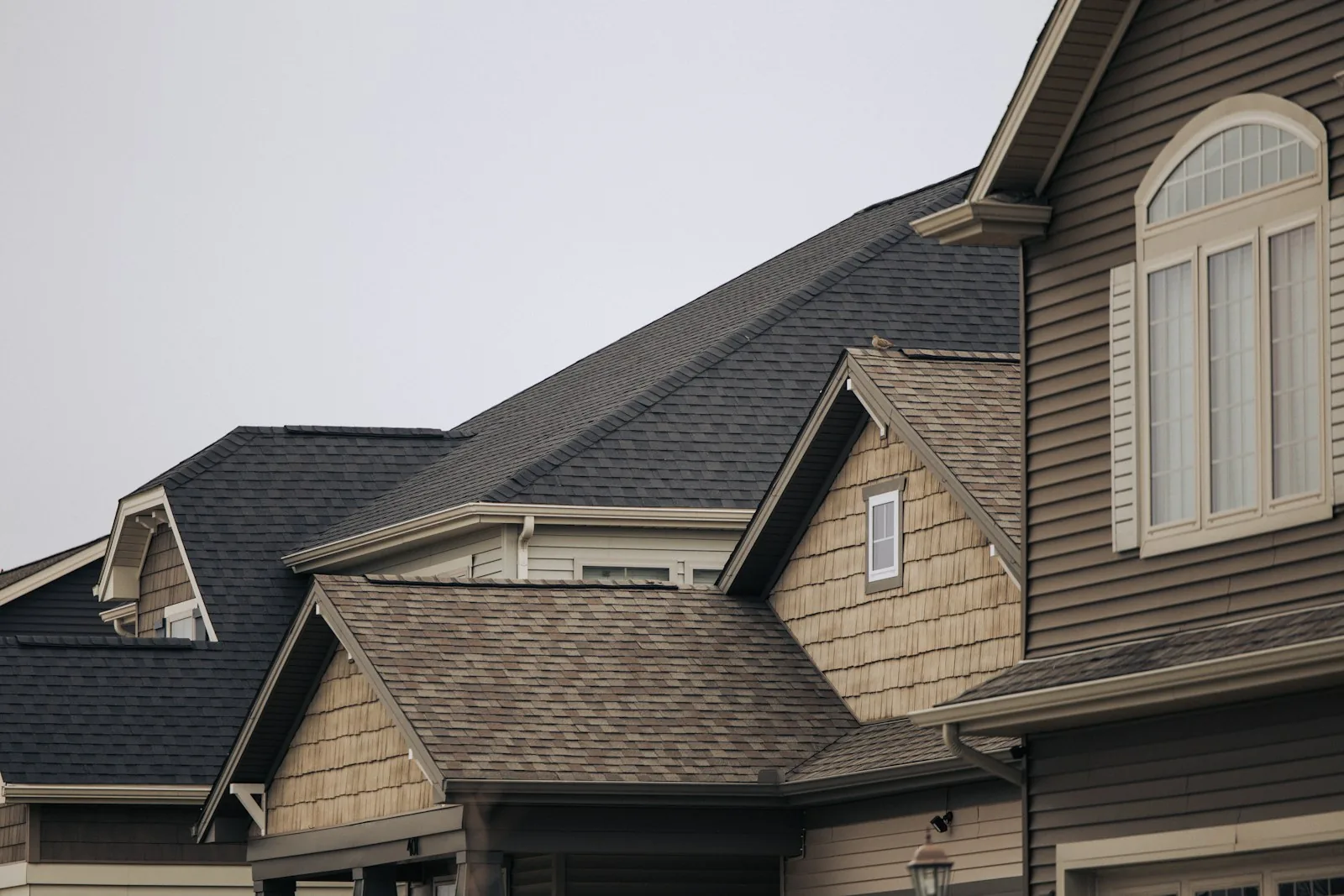
The homeowner in Westerville did not call you because of hail. They called because their carrier gave them until renewal to replace a nineteen year old roof or find another insurer. No storm, no adjuster, no claim number. Just a deadline and a question you were not trained to answer: what does a roof have to look like for an insurance company to keep writing the policy.
That call is becoming the most common high intent roofing call in Ohio, and it is not one carrier's decision. In its first half 2026 analysis published on September 15, 2026, Insurify put the national average annual home insurance premium at $3,012 after a 2.2% rise in six months, with Ohio at $1,653 after a 3.1% rise. Carriers cannot reprice fast enough to cover losses, so they are doing the other thing available to them, which is deciding which roofs they are willing to insure at all.
This is fixable, and it is not a matter of writing better storm ads. Replacement demand has not disappeared. It has moved to a different trigger, a different season and a different search query, and the rules about what you may say to that homeowner change hard at the Ohio, Iowa, Kentucky and Virginia state lines. What follows is what changed in 2026, five ways underwriting driven demand breaks a storm built pipeline, how the four markets differ in law and in practice, and what you sell to a homeowner whose roof is not damaged but is no longer insurable.
What Changed in 2026: The Roof Became an Underwriting Decision
The roof is now something a carrier underwrites rather than something a carrier pays a claim on. Through 2025 and 2026 insurers across the Midwest, the Plains and the Mid-Atlantic moved roof age and condition from a rating factor into an eligibility condition. The question is no longer how much a carrier pays toward a roof. It is whether the carrier keeps the policy while that roof is on the house.
The Premium Data Published on September 15, 2026
Insurify's first half 2026 analysis, published September 15, 2026, put the national average annual home insurance premium at $3,012, up 2.2% in six months. The four markets covered here moved differently: Ohio at $1,653 after a rise of 3.1% or $49, Virginia at $1,774 after 3.3% or $57, Iowa at $2,828 after 0.9%, and Kentucky at $2,820 after 1.7%. The figures are median HO-3 policies at each state's average dwelling coverage for a homeowner with good credit and no claims.
Virginia Wrote the Rules Into Statute, Effective January 1, 2027
Virginia is the first of these four states to put roof underwriting limits into law. House Bill 677 and Senate Bill 402, enacted May 12, 2026 and effective January 1, 2027, amend Virginia Code 38.2-2114 so that an insurer may not refuse to write, cancel or refuse to renew a policy solely because an asphalt shingle roof is under 15 years old, and may not refuse solely on condition where an authorized inspector reports five years or more of useful life remaining. On a roof at least 15 years old, the insurer must permit an owner paid inspection before requiring replacement. An authorized inspector includes a contractor licensed with the residential building classification.
Why the Storm Calendar No Longer Predicts Your Demand
Underwriting driven roof demand follows policy renewal dates, not weather. A hail event concentrates demand into eight weeks in one set of zip codes, which is why storm roofers staff and spend in bursts. Renewal letters arrive in a steady monthly trickle across a whole state, in every neighborhood with housing stock of the right age. A business whose budget spikes with the Storm Prediction Center outlook is buying attention in the wrong weeks, and bidding hardest where the roofs were most recently replaced.
Ohio Sits in This Shift With No Statutory Floor
Ohio has neither Virginia's protections nor a state roofing registry, which makes it the most exposed of the four markets for homeowners and the most open for contractors. Ohio homeowners insurance rates rose 36.4% between 2019 and 2024, including 10.9% in 2024 after 10.2% in 2023, on Dayton Daily News reporting of January 2025, and the state recorded 74 tornadoes in 2024 against a previous record of 61 set in 1992. Ohio Senate Bill 64 of the 134th General Assembly would have created residential roofing contractor registration with the Ohio Construction Industry Licensing Board and banned deductible advertising, but it stalled in committee. A homeowner in Columbus or Dayton holding a roof condition letter has no statutory right to an inspection and no state registry to check you against.
Five Ways Underwriting Driven Demand Breaks a Storm Built Pipeline
A storm pipeline is built to find damage, document it and wait for an adjuster. Underwriting demand has no damage, no adjuster and no waiting, so five parts of the machine misfire at once.
1. Your Best Lead Now Arrives Already Told Their Roof Is a Problem
A homeowner holding a non renewal or inspection letter is further down the buying process than any storm lead you have ever bought. They have a deadline and no argument to win about whether the roof needs work. What they do not have is a price, a timeline or any idea who to trust. Roofing companies answer that call with a free storm inspection script, which reads as a pitch to somebody who never asked whether they had damage.
2. In Ohio There Is Nothing for the Homeowner to Check You Against
Ohio's lack of statewide roofing registration turns your credibility into a marketing problem rather than a lookup. With Senate Bill 64 dead in committee, an Ohio homeowner cannot verify a roofing contractor through a state license search the way they can verify an electrician through the Ohio Construction Industry Licensing Board. City registration in Columbus or Cleveland is the nearest equivalent and most homeowners do not know it exists. Whatever proof of legitimacy you publish is the only proof most Ohio buyers will ever see, and almost no roofing website in the state publishes any.
3. The Claim Script You Advertise Is Restricted in Three of These Four States
Most storm roofing advertising says some version of we handle your insurance and you only pay your deductible, and that sentence is regulated differently in each market. Iowa Code 103A.71 makes a residential roofing contract void, with no payment obligation, if the contractor advertised a deductible rebate or negotiated the claim. Kentucky Revised Statutes 367.628 bars a contractor from representing or negotiating an insured's claim unless licensed as a public adjuster. One national ad template running in Des Moines and Louisville is not a compliance detail, it is a contract you cannot enforce.
4. Retail Conversion Collapses When the Roof Looks Fine From the Driveway
Underwriting rejections happen to roofs that still look acceptable to their owners, which is a harder sale than a roof with a tarp on it. Granule loss, curling, an original three tab layer at 18 years and algae streaking are all underwriting triggers, and none feel urgent to a homeowner standing in their own yard. Companies that sell on visible damage have no presentation for this appointment, and the ones that improvise end up arguing that the insurer is unreasonable.
5. The Fraud Headlines Raise the Trust Cost of Every Cold Approach
Public roofing fraud cases make the honest contractor's first conversation more expensive. Roofing Contractor reported on September 23, 2026 that police, regulators and the Florida Attorney General were pursuing roofing complaints across three states, including 209 Florida complaints as of July 17, 2026 against two Jacksonville companies over telling homeowners insurance would cover replacement apart from the deductible, then seeking further payment and filing liens. None of it is your fault and all of it is your problem, because the homeowner reading local coverage is the one you are about to call.
Pull every dead lead from the last 12 months whose notes mention insurance, renewal, inspection or policy and where no claim number was recorded. That list is your underwriting demand, and most roofing companies file it under unqualified. Compare its size to your storm lead volume for the same period.
Where Underwriting Demand Lands Hardest: Ohio, Iowa, Kentucky and Virginia
The same shift produces four different offers across Ohio, Iowa, Kentucky and Virginia, because the law decides what you may say about the policy and the housing stock decides how many roofs are in the firing line.
Ohio: The Largest Unprotected Roof Market of the Four
Ohio combines a big, old, freeze thaw housing stock with no statutory brake on roof underwriting, which is why letter driven call volume here is the highest of these four states. Columbus, Cleveland, Cincinnati, Toledo and Dayton all carry dense mid century and 1990s subdivisions whose original and first replacement roofs are now at or past the age where carriers start asking questions, and the Ohio freeze thaw cycle damages shingle edges and flashing without ever producing a claimable storm event. Unlike a Virginia homeowner from January 1, 2027, an Ohio homeowner has no statutory right to an inspection before a carrier requires replacement, and the Ohio Department of Insurance has no roof age rule to point them to.
Two Ohio specifics should shape every page you run here. The first is the absence of state registration, which means your proof has to be published rather than looked up: liability limits, workers compensation status, city registration numbers for Columbus and Cleveland, and what you charge if a carrier rejects the finished roof. The second is Ohio Revised Code 1345.22, which lets a homeowner cancel a home solicitation sale until midnight of the third business day after signing. In a market with no registry, being the company that explains that cancellation right is the cheapest trust signal available.
The search opportunity in Ohio is the letter itself. Homeowners in Cincinnati and Cleveland are typing the exact words their carrier used, and almost no Ohio roofing site has written for them. Pages explaining what a condition inspection looks at, what remaining useful life means, and what it costs to bring a 20 year old roof back to insurable condition are the ones search engines and AI assistants quote. Most companies bidding on Ohio roofing leads are still buying storm damage keywords into a landing page about hail, which answers a question this homeowner did not ask.
| State | Average annual premium and first half 2026 change | The rule that shapes your contract and your ads | The offer that works there |
|---|---|---|---|
| Ohio | $1,653, up 3.1% or $49 | No state roofing registration and no roof age statute; ORC 1345.22 gives three business days to cancel | Publish the credentials nobody can look up, and rank for the words in the carrier's letter |
| Iowa | $2,828, up 0.9% | Iowa Code 103A.71 voids the contract if you advertise a deductible rebate or negotiate the claim | Audit every ad first, then sell registration and the written notice as proof you are the safe choice |
| Kentucky | $2,820, up 1.7% | KRS 367.628 bars claim negotiation, deductible rebates and any payment to the insured above $100 | Drop claim advocacy entirely and sell condition, ice dam durability and a monthly payment |
| Virginia | $1,774, up 3.3% or $57 | From January 1, 2027, HB 677 and SB 402 let an authorized inspector's report keep the policy in force | Sell the paid roof inspection as a product, because your licence makes your report count |
Iowa, Kentucky and Virginia: Three Different Answers to the Same Letter
Iowa is the state where a careless advertisement destroys the contract, not just the reputation. Iowa Code 103A.71 covers anyone contracting to repair or replace a residential roof after a catastrophe including windstorm, hail or tornado on a building housing one to four families. It prohibits advertising or promising to rebate any insurance deductible and prohibits negotiating the claim for the owner, and it requires written notice before contracting that the owner may owe full payment regardless of insurance proceeds and that the contract is void if the contractor does either prohibited thing. Iowa also registers contractors through the Department of Inspections, Appeals and Licensing at $2,000 a year in construction earnings, with a $50 fee and a $25,000 bond for out of state contractors with employees. After the derecho years, Des Moines and Cedar Rapids homeowners ask about it.
Kentucky has the tightest limits on what you may offer the homeowner, and they are recent enough that most local advertising has not caught up. Kentucky Revised Statutes 367.628, effective June 27, 2025, bars a contractor from representing, negotiating or advertising to negotiate on behalf of any insured on a real estate insurance claim unless licensed as a public adjuster under Subtitle 9 of KRS Chapter 304. Where insurance is expected to pay, the same section bars rebating any part of a deductible as an inducement, bars discounts against your fee, caps at $100 any compensation to the insured including gifts and referral fees, and bars a mechanic's lien above the insurance payment. With claim advocacy off the table and referral incentives capped, the Louisville and Lexington offer rests on condition, ice storm durability and a clean monthly payment, with the Kentucky Department of Insurance as the neutral reference you send homeowners to.
Virginia is the only one of the four where the new law pays you directly, and the date is January 1, 2027. From that date, under House Bill 677 and Senate Bill 402 amending Virginia Code 38.2-2114, an insurer may not refuse, cancel or non renew solely on asphalt shingle roof age under 15 years, may not refuse solely on condition where an authorized inspector finds five years or more of useful life remaining, and must permit an owner paid inspection before requiring replacement on a roof 15 years or older. A contractor licensed with the residential building classification is an authorized inspector, which turns a Virginia licence into a billable product: a paid inspection report that can keep a Virginia Beach, Norfolk or Richmond policy in force. Virginia licences by project value through the Board for Contractors, from Class C at $1,000 to Class A at $120,000 or more. The pressure is real in Hampton Roads, where Insurify put Chesapeake's first half 2026 increase at 15.4%, or $365, the largest in the state.
Designing the Offer for a Homeowner With a Letter and No Damage
The product a letter holding homeowner needs is certainty about their policy, delivered on a deadline, and a roof is only part of it. Three pieces have to exist before the phone rings.
The Paid Inspection Report, Priced and Published
A documented roof condition report with photographs, measured remaining service life and a clear recommendation is a product you can sell at a real price, and it qualifies the customer for you. In Virginia it has statutory weight from January 1, 2027. In Ohio, Iowa and Kentucky it has no statutory status but it still travels, because a homeowner who paid for a report has already decided you are the expert. Publish the price.
A Repair and Restore Tier Between Nothing and Full Replacement
Many underwriting rejections can be answered with targeted work rather than a full tear off, and a company offering only replacement loses those jobs entirely. Flashing, ridge, valley and vent repairs, selective shingle replacement and a documented report can move a roof from questionable to acceptable for a fraction of a replacement price. That tier captures the appointments where the homeowner was never going to spend $14,000 this year and would otherwise have called nobody.
Financing on the First Quote, Not After the Objection
When no claim is funding the work, the monthly payment is the price the homeowner is actually evaluating, so it belongs on the first quote. A company that presents finance only after a flinch has taught the customer the real price was too high. Put the monthly figure beside the total on the estimate and on the website, and the deadline in the carrier's letter starts working for you instead of against you.
Write the four sentences your estimator will say when a homeowner asks whether their insurer is allowed to do this, and make them state specific. In Virginia from January 1, 2027 the answer involves an inspection right. In Ohio, Iowa and Kentucky the honest answer is that the carrier may set its own eligibility rules, and the options are to repair, replace or shop the policy. Promising a protection that does not exist, or shrugging, are the two fastest ways to lose an appointment you had already won.
What Replaces Storm Chasing as Your Primary Demand Engine
The replacement for storm chasing is a demand system built on roof age, policy renewal timing and search intent, all three of which are knowable in advance and none of which require a weather event.
Rank for the Carrier's Vocabulary, Not the Roofer's
The searches that convert in an underwriting market use the insurer's words, and roofing websites are written in the roofer's words. Homeowners search close to what the letter said: roof age, remaining useful life, roof condition inspection, non renewal, proof of roof age. Pages answering each of those plainly, with the state named, get retrieved by search engines and by AI assistants. This is the cheapest opening in roofing marketing right now precisely because it looks like insurance content rather than roofing content.
Target by Roof Age and Subdivision Build Year
Roof age is the best targeting variable available and it does not move. Subdivision build years, permit records and your own estimate history tell you which streets in Columbus, Cedar Rapids or Lexington are full of roofs between 17 and 25 years old, and that is where the letters are going. Budget allocated that way keeps working every month of the year, unlike a storm polygon that is worthless nine weeks after the event.
Work the Renewal Calendar, Not the Weather Calendar
Policy renewals cluster, and a homeowner who declines your quote in March is under the same deadline in September. Follow up tied to the date on the letter, rather than a generic 30, 60, 90 day cadence, catches the second conversation at the moment the deadline turns real. Most roofing companies close the record after one no, which in this market means handing the job to whoever calls in month five.
How Leadnox Builds a Roofing Pipeline That Does Not Need a Storm
Leadnox builds roofing contractors demand systems around the underwriting trigger rather than the weather trigger, which is a different brief from generating more storm leads.
Search and AI Answers Written in the Carrier's Language
Leadnox writes and ranks the pages a homeowner reads between opening the letter and picking up the phone: roof age and insurance eligibility, what a condition inspection examines, and repair versus replacement at 20 years. Localised properly, that means an Ohio page naming the Ohio Department of Insurance and the absence of a state roofing registry, and a Virginia page built around the January 1, 2027 inspection right, rather than a national template with the state name swapped in.
Paid Demand Targeted on Roof Age and Measured on Installed Roofs
Leadnox runs performance marketing against installed roofs rather than signed agreements, and builds audiences from housing age and subdivision data instead of storm polygons. Install outcomes feed back into the campaigns so budget moves toward the segments that finish, and every ad is audited against the state rules first, because an Iowa advertisement mentioning deductibles does not earn a warning letter, it voids the contract it produced.
Automation That Works the Renewal Deadline
Leadnox builds the follow up sequences and answering systems that keep a letter holding homeowner engaged until the deadline forces a decision. That means capturing the renewal date at the booking call, sequencing against it, sending the inspection report and the financing option without being asked, and making sure the callback at eight at night reaches a person. The revenue in this market sits in month three, and most roofing companies stop contacting the customer in month one.
The Numbers That Tell You the Shift Is Working
Four metrics show whether your business has moved with the demand or is still pricing on storms. Review them monthly with sales and production in the same room.
Share of Booked Appointments With No Claim Number
Share of booked appointments with no claim number is the cleanest measure of underwriting demand you are capturing. A roofing company running storm marketing typically sees this in single digits. In markets like Ohio, where carriers are actively culling older roofs, a healthy figure by the end of 2027 looks more like 30% to 40%, and the trend line matters more than the level.
Cost Per Installed Roof, Split by Trigger
Cost per installed roof is total marketing spend divided by roofs actually installed, split between storm triggered and underwriting triggered work. Cost per lead hides everything that matters here, because the two triggers convert on different timelines. Expect underwriting jobs to show a longer cycle and a better close rate, and budget accordingly rather than judging them on the storm channel's speed.
Paid Inspection Volume and Conversion to Work
Paid inspection volume is how many condition reports you sell a month, and its conversion rate is how many become repair or replacement contracts. Both are leading indicators. If you are selling inspections but converting under 40% of them, the report is describing the roof rather than recommending a decision, which is a writing problem rather than a sales problem.
Follow Up Reach Rate at Day 60 and Day 120
Follow up reach rate is the share of unconverted estimates you actually speak to again at 60 and 120 days. In a renewal driven market this number is revenue, because the deadline in the letter arrives after your first quote has gone cold. Anything under 25% at day 120 means the sequence is running on autopilot and nobody is calling.
Frequently Asked Questions
Yes. Ohio has no statute limiting roof age or roof condition as an underwriting condition, so an Ohio carrier may make replacement a requirement of issuing or renewing a policy. Ohio homeowners insurance rates rose 36.4% between 2019 and 2024, on Dayton Daily News reporting of January 2025, and carriers have responded by tightening eligibility. The homeowner's options are to repair, replace or move the policy.
It stops insurers refusing, cancelling or non renewing a policy solely because of asphalt shingle roof age under 15 years, or solely on condition where an authorized inspector reports five years or more of useful life remaining. For roofs 15 years or older, the insurer must permit an owner paid inspection before requiring replacement. House Bill 677 and Senate Bill 402 were enacted May 12, 2026.
Not in Iowa or Kentucky. Iowa Code 103A.71 prohibits advertising or promising to rebate any insurance deductible and makes the resulting contract void with no payment obligation. Kentucky Revised Statutes 367.628, effective June 27, 2025, bars offering to pay or rebate a deductible as an inducement and caps any compensation to the insured at $100 in any form, including gifts and referral fees.
Sell certainty about the policy rather than repair of damage. Lead with a paid condition report that measures remaining service life, offer a repair tier that can return a borderline roof to acceptable condition, and put a monthly payment beside the total on the first quote. The deadline in the carrier's letter supplies the urgency, so the estimator does not need to create any.
Three business days in both Ohio and Kentucky. Ohio Revised Code 1345.22 gives the buyer until midnight of the third business day after signing to cancel a home solicitation sale, and Kentucky Revised Statutes 367.420 sets the same window. Written notice in any form is sufficient in both states, and it need not take a particular form to be effective.
Your Next Hundred Roofs Will Come From Underwriting, Not Hail
Leadnox builds roofing contractors the search, paid and follow up systems that reach Ohio, Iowa and Virginia homeowners at the moment their insurer puts the roof in question, and prices the work on installed roofs rather than signed agreements.