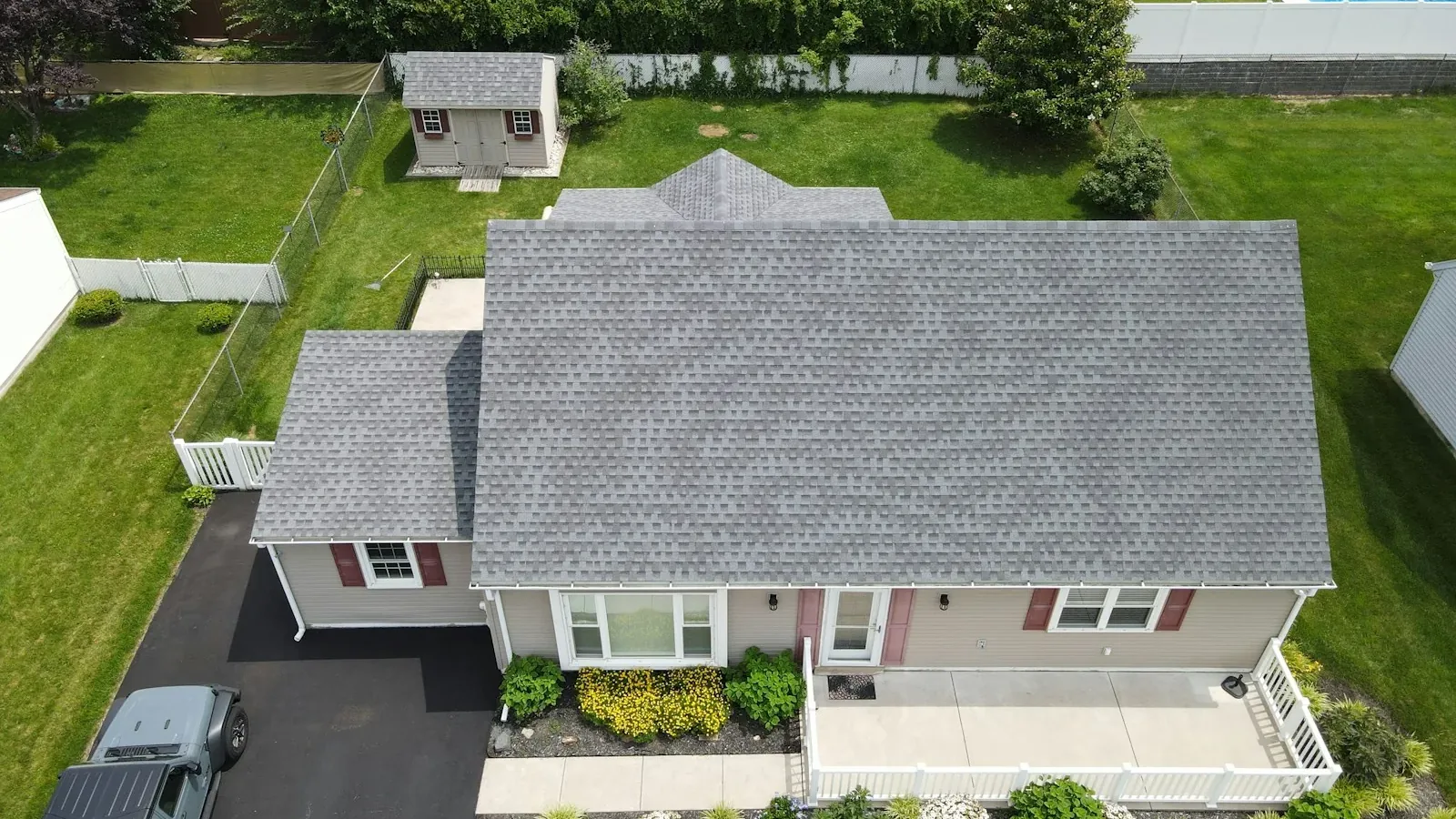
You know the appointment. A homeowner in Ankeny calls in September about a June hail event, you climb the roof, you count the hits on the north and west slopes, you write the estimate, and six weeks later the carrier's report comes back saying the damage is cosmetic and the roof has remaining serviceable life. The homeowner reads that sentence, decides you oversold them, and the job dies at the kitchen table. You have paid for the lead, the drive, the inspection and the estimate, and you are holding a contingency agreement that will never convert. In Iowa that appointment happens all summer.
This is not a sales problem, and it is not your estimator. On August 27, 2026, a district judge in Comanche County, Oklahoma de-designated 31 of 44 disputed documents in a homeowner lawsuit against State Farm Fire and Casualty Company, and the roofing trade picked the story up on September 10, 2026. The plaintiffs allege the documents show a nationwide initiative, beginning in 2020, to reduce what the carrier pays on wind and hail claims. State Farm strongly rejects that characterization and says it evaluates every claim individually on the documented damage and the policy terms. A jury is scheduled to weigh it in December 2026.
Whatever that jury decides, the argument itself has already changed the conversation on your customers' driveways, and that part is yours to work with. This article covers what the court actually unsealed and when, the six ways a tighter claims environment shows up in a roofing company's pipeline and margin, how it lands differently in Iowa, Hawaii, Rhode Island and Ohio, and what to build so your revenue stops depending on somebody else's approval decision.
What an Oklahoma Court Unsealed in August 2026
An Oklahoma judge removed the confidentiality protection from 31 internal insurer documents about wind and hail claim handling, and those documents are now public. The case is West v. State Farm Fire and Casualty Company in Comanche County District Court, brought by homeowners whose roof claim was denied after a June 2022 hailstorm. District Judge Grant Sheperd ruled on August 27, 2026 that 31 of the 44 documents the carrier wanted kept under seal were not confidential. The National Roofing Contractors Association carried the story to the trade on September 10, 2026, which is when most roofing contractors first saw it.
The Documents and the Dates
The unsealed material is internal, not public relations copy. According to reporting on the filings, the 31 documents include internal emails, instant messages, claims dashboards and executive communications dated between 2020 and 2023, all concerned with how wind and hail damage claims were handled. Plaintiffs' counsel Reggie Whitten has put the first year reduction in indemnity payments at roughly $1.4 billion, and trade coverage of the unsealing describes executive emails referencing savings near $15,000 per denied or underpaid claim. More than 1,000 related suits have been filed in Oklahoma.
What Is Alleged and What the Carrier Says
Both sides of this are on the record, and a roofing contractor should be able to state both. The homeowners allege a deliberate, nationwide program starting in 2020 that narrowed the internal standards for approving a roof, and their attorneys point to a quoted line from a manager telling staff they were approving too many roofs. State Farm strongly rejects any allegation that it intentionally underpays, says each claim is evaluated individually against documented damage and policy language, and notes it paid more than $1 billion for wind and hail losses in Oklahoma over two years. Nothing has been proven, and trial is set for December 2026.
Why an Oklahoma Case Reaches a Des Moines Driveway
An Oklahoma docket matters in Iowa because the alleged program is described as nationwide and because homeowners read national news. Your customer in Des Moines or Cedar Rapids is not following a Comanche County docket, but they see the headline version on local television and type the short form of it into their phone before they call you. Six months ago a denied Iowa hail claim produced a disappointed homeowner. Today it produces one who suspects the denial was structural and is looking for somebody who can explain the process rather than just quote a roof.
The Six Pain Points Roofing Contractors Are Feeling Right Now
A tighter claims environment does not hit your business as one big event, it hits as six separate leaks. Each one has a different fix, and only two of them are about selling harder.
1. Your Signed Contingency Agreements Convert at a Lower Rate
A contingency agreement is only worth what the carrier approves, so a tighter approval standard turns your signed paperwork into a forecast you cannot rely on. If fewer inspected roofs now turn into approved scopes, your pipeline report is overstating next month's revenue by exactly that difference. Stop treating a signature as pipeline: track approved scopes separately, forecast off approvals, and build a second demand stream that never depended on a claim.
2. Supplements Take Longer and Your Receivables Age With Them
Every extra round of supplement negotiation is working capital sitting on somebody's roof. When the initial scope comes in short on ice and water shield, drip edge, ridge vent or steep and high charges, your office goes back with photographs and code citations, and each round costs days. Days become a ninety day receivable, and you are financing the carrier's review out of your own line of credit. The response is documentation complete on the first submission, and a production schedule that does not start until the scope is settled.
3. Cosmetic and Wear and Tear Are Doing More Work in the Denial Letter
The two phrases that kill Iowa hail claims are cosmetic damage and remaining serviceable life, and both are arguments about function rather than appearance. A report conceding the hail hit the roof but saying it did not shorten the roof's useful life shifts the fight from whether there was a storm to whether the storm mattered. That is a technical argument, won with granule loss documentation, mat fracture evidence, test squares and the manufacturer's own damage criteria, not with a louder opinion. Contractors who cannot make it in writing lose claims that better documented competitors win on the same street.
4. The Homeowner Arrives Suspicious of Their Carrier and of You
A homeowner primed by claim denial coverage treats every roofer as a possible second problem. They have just read that a large insurer is accused of systematically underpaying, and the next thought is that the contractor recommending a full replacement might be overselling in the other direction. That is a trust problem, and it is solved with published process, named people, real project addresses and reviews that mention the claim process by name, not with a stronger close.
Count how many of your last twenty inspections ended in an approved scope. If the number is materially below where it was two seasons ago, your cost per booked job has already moved and your ad budget is being priced against the old rate. Reprice the funnel on approval rate, not on inspection rate, before you renew anything.
5. Your Canvassers Are Burning Days on Roofs That Will Not Be Approved
Door knocking a storm grid is a volume strategy that assumes a predictable approval rate, and that assumption is the thing under pressure. If a crew works a Davenport neighborhood for four days and fewer of those roofs clear the carrier's threshold, the same labor cost produces fewer contracts. The answer is not more doors, it is better targeting before the doors: hail swath data matched against roof age and prior claim history, so your crew spends its hours where damage is most likely to be judged functional.
6. Your Revenue Mix Is Shifting to Retail and Your Pricing Has Not Followed
When fewer claims get approved, more homeowners either pay for a smaller repair themselves or do nothing, and the work that remains is retail work priced on a retail conversation. A company built around insurance restoration has a sales process, a price book and a marketing budget tuned to a homeowner whose decision is really the carrier's. A retail homeowner in Iowa decides on price, financing, warranty and reputation. If your website and your quotes still assume the claim, you are selling to a customer who no longer exists in the volume you planned for.
Where a Tighter Claims Environment Hits Hardest: Iowa, Hawaii, Rhode Island and Ohio
A claims squeeze lands differently in every state because the storm that generates the claim, the housing stock the storm hits and the regulator that hears the complaint are all different. The four markets below show four distinct versions of the same pressure.
Iowa: Hail Season Ends in July and the Denials Arrive in September
Iowa's problem is timing as much as it is coverage. The severe hail window across Des Moines, Cedar Rapids and Davenport runs roughly May through July, which means the denial letters your customers are reading in September are decisions on storms that happened a full quarter ago. By then the tarps are gone and the interior stain that would have made the case has dried. An Iowa roofing company that waits for the claim outcome before starting the sales conversation begins three months cold, every year, by design.
The second Iowa factor is memory. The August 10, 2020 derecho produced insurance claim payments of roughly $1.6 billion in the state according to the Iowa Insurance Division, and Cedar Rapids in particular has a generation of homeowners who lived through a mass claims event and formed a view about how it went. That cuts both ways for you. It means the phrase wind driven damage needs no explanation in Linn County, and it also means a homeowner who felt underpaid in 2020 arrives at a 2026 inspection already expecting a fight. Iowa also has a carrier mix that is not purely national, with long established Iowa based mutuals writing a meaningful share of the farm and small town book, so the claim experience genuinely differs between two Iowa neighbors in a way it might not in a single carrier market.
The practical Iowa move is to own the search results and AI answers for the questions that follow a denial. When a homeowner in Polk or Linn County types what to do when a hail claim is denied, the page that answers it should be yours, it should name the Iowa Insurance Division as the complaint route, it should explain the appraisal provision in plain words, and it should link to the contractor registration search so the homeowner can verify you in the same visit. That is the whole play in one page, and most of your competitors in Iowa roofing have not built it.
| State | What generates the claim | Where the denial usually lands | The regulator a homeowner is told to call |
|---|---|---|---|
| Iowa | May to July hail across Des Moines, Cedar Rapids and Davenport, plus derecho scale straight line wind | Cosmetic damage and remaining serviceable life on a roof inspected a quarter after the storm | Iowa Insurance Division |
| Hawaii | Trade wind events and tropical systems reaching Honolulu, Hilo and Kahului | Wear and tear, because salt air and year round UV give the carrier a ready alternative cause | Hawaii Insurance Division |
| Rhode Island | Nor'easters and coastal wind across Providence, Warwick and Cranston | Age of the roof, on housing stock that is among the oldest in the country | Rhode Island Department of Business Regulation |
| Ohio | Spring hail and wind across Columbus, Cleveland, Cincinnati, Toledo and Dayton | Competing cause, where freeze thaw damage is offered as the real explanation instead of the storm | Ohio Department of Insurance |
Hawaii, Rhode Island and Ohio: Three Different Denial Arguments
Hawaii roofing contractors face a coverage structure that splits the claim before anyone looks at the roof. Hurricane cover in Hawaii is typically written as a separate policy or endorsement rather than as part of the standard homeowners policy, so a wind damaged roof in Honolulu can trigger a debate about which policy responds and which deductible applies before the damage itself is assessed. On top of that, constant salt air and year round ultraviolet exposure age a roof visibly, which hands a carrier a well supported wear and tear argument on a fifteen year old Oahu roof that a mainland carrier could not make as easily. And because materials ship in, a partial payment in Hawaii does not buy a partial roof the way it might in the Midwest, so an underpaid claim stalls the job rather than shrinking it.
Rhode Island's version of the problem is the age of the houses. Rhode Island has one of the oldest owner occupied housing stocks in the country, with a median age around 59 years in the 2024 American Community Survey, which means a nor'easter claim in Providence, Warwick or Cranston very often lands on a roof deck that predates the current homeowner. Age is the easiest denial argument a carrier has, and it is available on most Rhode Island roofs by default. The other Rhode Island specific is the named storm deductible, which turns on a formal weather service designation rather than on wind speed at the property, so two neighbors with the same torn ridge can face very different out of pocket numbers depending on how the storm was classified. Explaining that difference before the adjuster arrives is worth more in Rhode Island than anywhere else on this list.
Ohio gives the carrier two storms to choose between. A roof in Columbus or Dayton can take hail in May and then spend January going through repeated freeze thaw cycles, and a carrier report that attributes the damage to the freeze thaw rather than the hail is not obviously wrong on the face of it. Ohio roofing contractors therefore lose more claims to competing cause than to flat denial, and the winning documentation is date anchored: storm reports for the specific event, dated photographs, and damage patterns that match impact rather than thermal cycling. Ohio's storm restoration market is also the largest of these four, which means the homeowner in Cleveland has usually already had three other roofers on the property and is deciding between arguments, not just between prices.
Why the Claim Conversation Has to Happen Before the Adjuster Does
The single highest return change a roofing company can make in this environment is moving its explanation of the claims process from the kitchen table to the internet. Everything below follows from that.
The Homeowner Researches Before They Dial
Most homeowners form a view of their claim before they speak to a contractor. They read the carrier's letter, search the phrase in it, and ask an assistant what cosmetic damage means and whether they can dispute it. Whatever they read in those ten minutes becomes the frame you walk into. If that answer was written by a contractor in another state, or by a public adjuster selling a different service, you start the appointment inside somebody else's argument.
Answering the Denial Question Is a Search Problem
The queries that follow a denial are specific, local and commercially valuable, and almost nobody in roofing writes for them properly. My roof claim was denied for cosmetic damage, what is the appraisal clause, can I dispute a roof claim in Iowa, how do I file a complaint about my insurer: these are the phrases your future customers type in the week they become customers. A page that answers each one in its first sentence, names the state regulator, and explains the process without demanding a phone call first is the cheapest acquisition asset a roofing company can build, and it keeps working for years after the news cycle ends.
Write down the five sentences your best estimator says at every denied claim appointment. Those five sentences are your next five pages. The estimator delivers them once per appointment at your highest hourly cost, and a page delivers them to every homeowner in your service area at no marginal cost at all.
Generative Engines Are Now the Second Appointment
Assistants answering insurance questions retrieve passages, not brands, so the way to be cited is to publish the clearest self contained answer to a specific question. When a homeowner in Cedar Rapids asks an AI assistant whether a denied hail claim can be reopened, the answer is assembled from pages that state the answer directly, name the jurisdiction, and do not bury it under a pitch. That is a writing discipline more than a technical one, and it decides whether you are the answer or one of ten links underneath it.
What Replaces a Pipeline That Depends on Approvals
The durable fix is to own demand that does not require a carrier to say yes first. Three things do that, in the order they pay back.
Own the Post Denial Search Surface in Your Counties
Rank for the questions a homeowner asks after a claim goes wrong, in the counties you actually serve. This is not national content, it is a set of pages built around your metro names, your state's regulator and the storms your customers remember. A contractor covering Polk, Linn and Scott counties needs three versions of the same explanation, each naming its own county, storms and permit office, because that is the specificity local results and AI answers both reward.
Rebuild the Retail Offer Properly
Retail roofing is a different sale, so it needs a different offer rather than a discounted version of the insurance one. That means financing presented as a monthly number, warranty terms stated plainly, a repair option that is real rather than a stalling tactic, and a quote the homeowner understands without an adjuster translating it. Companies that already had a competent retail motion are converting denied claims into revenue. Companies that did not are watching them become nothing.
Fix Speed and Follow Up Before Anything Else
Every extra channel is wasted if the first response is slow, because a homeowner with a denied claim is calling three roofers in one sitting. Answer inside a minute, book from the first conversation, and follow up on the claim timeline rather than your sales timeline, because a September denial was a June storm and the decision window is short. It is the cheapest improvement available to most roofing companies and the one most often postponed.
How Leadnox Approaches Claim Driven Demand
Leadnox builds roofing contractors a demand system that keeps producing when the claims environment tightens. The work splits three ways.
Search and AI Answers for the Questions That Follow a Denial
Leadnox builds and ranks the pages that answer post denial questions county by county, written so a search engine and an AI assistant can both lift the answer cleanly. For a roofing contractor in Iowa that means pages naming Polk, Linn and Scott counties, the Iowa Insurance Division and the storms local homeowners reference, not one generic page about insurance claims. After auditing hundreds of contractor campaigns, this is the asset with the longest payback and the one most often missing.
Paid Demand Priced on Approvals, Not Inspections
Leadnox runs performance marketing against booked and approved work rather than form fills, which matters more than usual when approval rates are moving. That means feeding real outcomes back into campaigns, separating storm response budgets from always on retail budgets, and pausing the storm grid when approval data says a swath is not converting. The point is to stop paying the same cost per lead for a lead worth less.
Automation That Holds the Claim Timeline
Leadnox builds the follow up sequences and AI answering that keep a claim in play across the months it now takes. A denied claim is not a lost claim until the homeowner decides it is, and most roofing companies lose those jobs to silence rather than to a competitor. Automated check ins tied to the claim's own dates, plus an answering system that captures the call you would have missed, recover a meaningful share.
The Numbers to Watch Through the Fourth Quarter of 2026
Four metrics tell you whether your response to a tighter claims environment is working. Track them weekly, because the December trial date will move the conversation again.
Approval Rate per Inspection
Approval rate per inspection is the number that quietly reprices everything else in your business. Take approved scopes divided by roofs inspected, measured monthly. When it falls, your true cost per booked job rises by the same proportion even though cost per lead has not moved. Most roofing companies do not track it and find out through their bank balance, a quarter late.
Retail Share of Booked Revenue
Retail share of booked revenue tells you whether you are actually diversifying or just talking about it. Measure the percentage of booked contract value that involved no insurance claim. If it is not rising in a season when approvals are harder, your retail offer is not real yet, whatever your website says.
Days From Claim Denial to Signed Retail Contract
Days from denial to signed contract measures whether your follow up matches the homeowner's decision window rather than your sales cadence. A homeowner just told no is most likely to act within two weeks. If your average sits well past that, the jobs are lost to the gap between your third call and your fourth, not to price.
Share of Post Denial Queries You Rank or Get Cited For
Track a fixed list of ten post denial questions for each county you serve and check monthly whether you appear in the local results and in AI assistant answers. This is the leading indicator for the other three, moving before the phone does by roughly six to ten weeks, which makes it the only one here that warns you before revenue moves.
Frequently Asked Questions
Yes. An Iowa homeowner can ask the carrier to re-inspect, invoke the appraisal provision in the policy if there is one, and file a complaint with the Iowa Insurance Division, which handles consumer complaints against insurers operating in the state. The strongest disputes are supported by dated storm reports, test square documentation and photographs of granule loss and mat fracture rather than opinion alone.
On August 27, 2026, a Comanche County, Oklahoma district judge ruled that 31 of 44 disputed internal documents were not confidential in a homeowner lawsuit over a denied roof claim. The documents span 2020 to 2023 and concern wind and hail claim handling. The plaintiffs allege a nationwide program to reduce payouts. The insurer strongly rejects that and the case is set for trial in December 2026.
Cosmetic damage is a coverage argument that the hail marked the roof without shortening its useful life, which allows a carrier to acknowledge the storm and still decline a replacement. It turns the dispute into a question of function rather than appearance. Countering it takes evidence of granule loss exposing the mat, fractured mat at impact points, and damage counts measured in documented test squares.
Door knocking still works, but only with targeting in front of it. The economics depend on the share of inspected roofs that get approved, so canvassing a whole swath costs the same labour and returns fewer contracts when approval standards tighten. Match hail swath data against roof age and prior claim history first, then send crews to the streets where damage is most likely to be judged functional.
Shift budget from claim dependent lead volume toward owned demand and retail conversion. Publish county level answers to the questions homeowners ask after a denial, price paid campaigns against approved work rather than form fills, build a genuine retail offer with financing and clear warranty terms, and automate follow up against the claim timeline instead of the sales timeline.
Your Pipeline Should Not Need a Carrier's Permission
Leadnox builds search, paid demand and follow up systems for roofing contractors in Iowa, Ohio, Rhode Island and Hawaii, so booked revenue keeps arriving when approval rates tighten.